
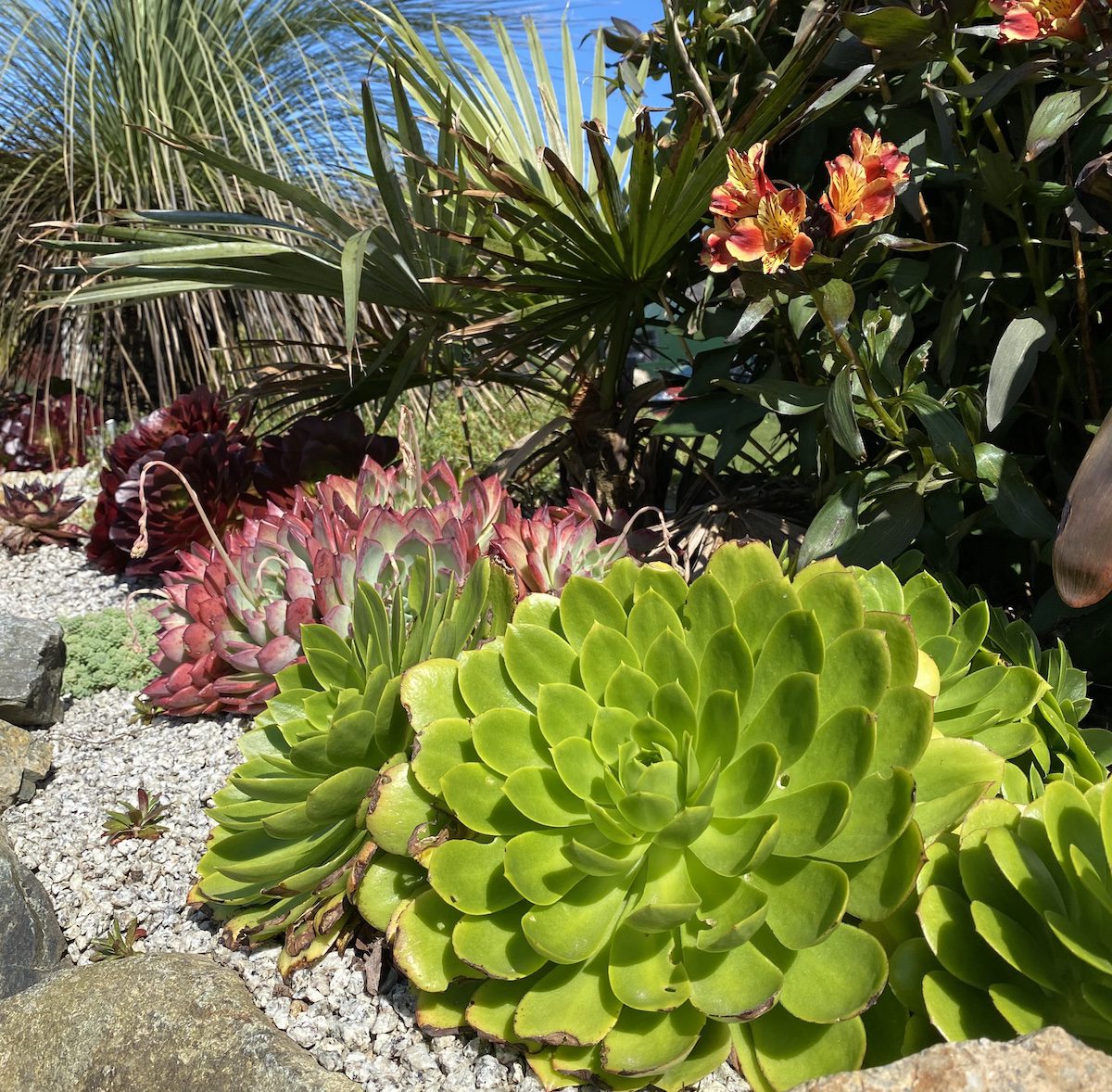
A resilient garden is not about giving up on beauty. It is about choosing plants that will still be standing, unwatered, at the end of a long dry August.
I get asked the same question most weeks at the nursery. Someone stands in front of a bench of agaves and yuccas and says, very politely, “but will it survive here?” The honest answer is that the question is twenty years out of date. The better question now is what will struggle here, because the climate that British gardens were planted for has quietly stopped showing up.
We garden in a country of hotter, drier summers and warmer, wetter winters than the one most of our borders were designed for. The lawn that browns in July and sits under water in February is telling you something. So is the hydrangea that wilts by lunchtime. A resilient garden listens to that and plants accordingly.
Start with the conditions, not the catalogue
Before I recommend a single plant I want to know three things: how much sun a spot gets, how fast the water drains, and how exposed it is to wind and salt. Get those right and the plant list almost writes itself. Get them wrong and even the toughest plant will sulk.
The plants that work here now did not work here twenty years ago, and the ones that worked twenty years ago are starting to struggle.
Mark · on climate
The plants I reach for first are the ones that store their own water and ask for very little: agaves, yuccas, aeoniums, the tougher palms, sea hollies, euphorbias and grasses. They are not a compromise. Used with restraint they make some of the most striking gardens I have ever built, and they will carry that garden through a drought without a hose.
Resilience also means planting for the wet. Sharp drainage is the single biggest favour you can do a Mediterranean-style plant in Britain. A raised gravel bed, a little grit worked into the soil, a slope to run the water off, and suddenly plants people swore would never overwinter come through February untouched.
None of this is about saving the planet from your back garden. It is about growing the plants that will still be here in fifty years and designing something genuinely beautiful around them. That is the whole idea behind Primal, and it is a far more optimistic way to garden than fighting the weather every season.