
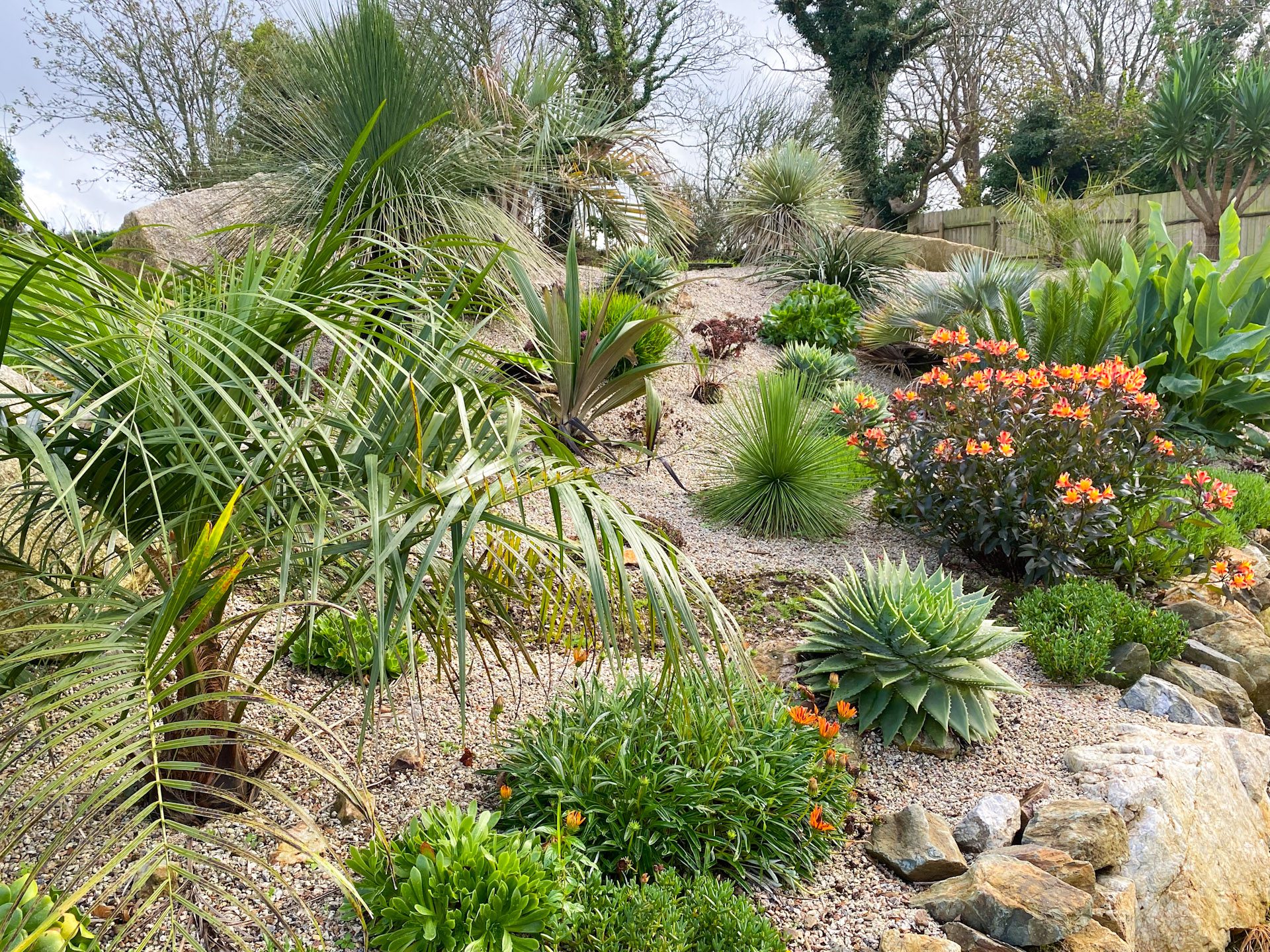
Flowers are the easy part. Structure is what holds a garden together in the grey middle of January, and structure comes from form.
If you only plant for flower you get six good weeks and a long disappointment. Architectural plants work the other way around. They earn their place through shape, line and silhouette, and they look as good wet through in November as they do in full July sun.
When I am choosing a structural plant I am thinking like a sculptor, not a florist. I want a clear form against a calm background, repeated just enough to feel deliberate. One agave is a curiosity. Three, spaced well, is a composition.
The plants I use again and again
Agave ovatifolia gives you a broad blue-grey rosette that holds its shape all year and shrugs off our winters. Yucca rostrata is the most architectural plant in the nursery, a blue pom-pom on a corrugated trunk. Brahea armata is the bluest palm you can grow in Cornwall, slow and weathered and worth the wait.
A single strong form, repeated with restraint, will do more for a garden than a dozen plants fighting for attention.
Mark · on structure
The mistake I see most often is overcrowding. Architectural plants need room around them to read as shapes. Leave the negative space. Let the gravel or the paving be part of the picture. A plant given air looks expensive; the same plant crammed into a busy border looks like everything else.
Pair the strong forms with something soft to stop it feeling like a cactus house. Grasses, low euphorbia and the haze of a stipa will move in the wind and make the rigid forms feel even more deliberate by contrast. That tension between the solid and the loose is where the whole look lives.